Professional Studies · RN to MSN Pathway
From your RN license to a Master of Science in Nursing in as few as two years.
You have an associate degree in nursing and an active RN license, and you are working. We will apply 60 credits from your ADN, your nursing competencies can earn up to 29 more through Credit for Prior Learning, and you will complete the remaining 31 credits online through Mississippi State to earn the 120-credit Bachelor of Applied Science in Professional Studies. Then you move on to the Master of Science in Nursing, where you will complete 34 credits. Eager students can finish the bachelor's portion in one year and the MSN in another.
Three stages take you from where you are now to graduate study. The middle stage is the shortcut: it uses the BAS in Professional Studies you can complete in about a year. The MSN can take about a year more, so the whole pathway can be done in two years. You set the pace, and you can spread it out if you need to.
Where you start
Your ADN and RN license
60 credits transfer from your community college associate degree in nursing, and you hold current RN licensure.
Fast track · about 1 year
Earn your B.A.S.
Complete 31 credits at Mississippi State. Meeting the nursing competencies can earn you up to 29 more credits for prior learning, bringing you to 120.
Where you finish · about 1 year
Master of Science in Nursing
Complete 34 credits: the post-licensure MSN core plus 15 credits in the concentration you choose. Your total for the RN to MSN pathway is 154 credits.
Where your 154 credits come from
Only 31 of the 120 bachelor's credits are new coursework. The other 89 come from your ADN (60) and Credit for Prior Learning (29). Add the 34-credit MSN, and you take 65 credits in all.
Already counted89 credits you do not have to take
60
29
Courses you take65 credits: 31 for the BAS + 34 for the MSN
12
19
19
15
Already counted:ADN transfer (60)Credit for Prior Learning (up to 29)
You take:General education (12)Additional BAS courses (19)MSN core (19)MSN concentration (15)
Where your 154 credits come from - Part 2
Bachelor's portion: 120 credits
Transfer credits from community college (ADN)60
General education courses12
Additional courses at Mississippi State19
PCS/NSG 2111 Introduction to the Bachelor of Applied Science1
NSG 4xxxx Professional Nursing Practice4
NSG 4xxxx Professional Nursing Practice Practicum3
PCS 4112 Professional Success Strategies in Applied Fields2
3000/4000-level PCS courses from recommended course listView recommended courses9
PCS 3103 Professional Leadership Strategies (3 credits)
This course is tailored to empower adult learners currently active in the workforce, and students with proficiency in technical fields by equipping them with practical expertise to elevate their leadership capabilities.
PCS 3003 Professional Collaboration and Technology in the Workplace (3 credits)
Explores the fundamental technical documentation, interpersonal skills, and collaborative strategies necessary for effective workplace interactions at the supervisory, middle management, and executive levels. The course centers on refining professional interaction competencies for adult learners in the workforce.
PCS 4413 Ethical & Legal Issues in Leadership (3 credits)
This course examines the complex ethical and legal issues that leaders face in organizational settings. Students will explore foundational ethical theories and their application to leadership, focusing on how leaders can navigate ethical dilemmas and make responsible decisions.
Credit for Prior Learning: up to 29 credits
If you meet the competencies, and as a licensed RN you are expected to, these seven courses are awarded as credit.
Credit for Prior Learning (up to)29
NSG 4015 Person-Centered Care I: Fundamental Concepts for Nursing Practice5
NSG 4025 Person-Centered Care I: Practicum5
NSG 4116 Person-Centered Care II: Applied Clinical Judgment in Nursing Practice6
NSG 4125 Person-Centered Care II: Practicum5
NSG 4134 Applied Clinical Judgment in Specialty Populations4
NSG 4141 Specialty Populations Practicum1
NSG 4163 Patient Safety and Quality Improvement3
Bachelor's degree (B.A.S.)120 credits
+
Master of Science in Nursing34 credits
=
RN to MSN total154 credits
Is This Pathway for You
Is this pathway for you?
This fully online pathway is built for working nurses whose next step is graduate study but who do not yet hold a bachelor's degree.
You have an Associate Degree in Nursing from a community college.
You hold current RN licensure.
You want to enter the Master of Science in Nursing, which requires a bachelor's degree.
[ADD ANY ADDITIONAL ADMISSION REQUIREMENTS, e.g. minimum GPA, license state, years of experience]
Why the BAS?
The Bachelor of Applied Science in Professional Studies is designed for community college graduates with technical degrees. It builds on the degree you already earned and adds leadership, communication, project management and decision-making skills.
Delivered fully online, so you can keep working while you earn your degree. [CONFIRM ANY IN-PERSON OR LOCAL REQUIREMENTS, e.g. where the clinical internship hours are completed]
YOUR DESTINATION
Choose your MSN concentration
Nursing Education and Simulation
Prepares nurses for roles in academic and clinical nursing education and workforce development. You develop the knowledge and skills to facilitate learning, evaluate educational outcomes, implement best practices in simulation and competency-based education, and lead educational initiatives across diverse settings.
15specialty credits
360supervised clinical internship hours
What you will be prepared to do
In addition to the outcomes for the MSN degree:
Assume the role of nurse educator in academic and practice settings.
Design competency-based nursing curricula.
Develop and evaluate simulation experiences.
Integrate emerging technologies into nursing education and simulation.
Roles you could serve in
FacultyClinical educatorSimulation specialistSimulation center leader
Nursing Leadership in Health Systems
Prepares nurse leaders who can influence healthcare systems, lead organizational improvement initiatives, and promote quality, safety, and equitable healthcare outcomes. The curriculum integrates systems leadership, healthcare operations, quality improvement, population health, organizational performance, and innovation.
15specialty credits
240supervised clinical internship hours
What you will be prepared to do
In addition to the outcomes for the MSN degree:
Lead healthcare teams and organizational initiatives that improve quality, safety, and population health outcomes.
Apply systems thinking to address complex healthcare challenges across diverse settings.
Design, implement, and evaluate quality improvement and organizational change initiatives.
Utilize data, evidence, and financial considerations to support strategic decision-making.
Roles you could serve in
Nurse managerDirectorClinical operations leaderQuality improvement specialistPopulation health leaderHealthcare administrator
Nursing Informatics and Data Science
Prepares nurses to transform healthcare through the effective use of information, technology, and data. The curriculum integrates nursing informatics, healthcare data analytics, digital health, clinical information systems, artificial intelligence, and evidence-based decision-making.
15specialty credits
240supervised clinical internship hours
What you will be prepared to do
In addition to the outcomes for the MSN degree:
Utilize data analytics and informatics tools to improve healthcare quality, safety, and population health outcomes.
Design, implement, and evaluate clinical information systems and digital health solutions.
Translate healthcare data into actionable insights that support organizational and clinical decision-making.
Lead technology adoption, optimization, and digital transformation initiatives across healthcare settings.
Roles you could serve in
Nursing informaticistClinical analystHealthcare technology specialistDigital health leaderClinical systems managerHealthcare data strategist
Academic Advising
Advising is an essential part of your success in the Bachelor of Applied Science in Professional Studies program. Whether you are just getting started or preparing to graduate, your dedicated academic advisor is here to guide you every step of the way.
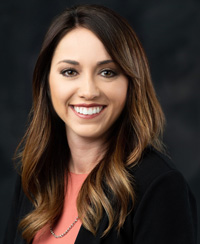
Dr. Kali Dunlap provides personalized advising for all students in the BAS program. From choosing the right courses to planning your path to graduation, your advisor is here to support you throughout your academic journey.
Advising Guidelines
Upon university admission, reach out to your advisor to determine the appropriate courses.
Mississippi State University relies on email as its official means of communication for all MSU students.
Check your MSU email daily for important updates. Find instructions for setting up your MSU online on the student services website.
Program Reminders
Ensure to consult with your advisor if you intend to deviate from the program.
If you opt for courses outside your recommended program of study, there is a risk that the classes will not count toward the degree.
A student may not receive a BAS degree if the student already has a bachelor's degree.
All programs of study are subject to review by the Registrar's Office for graduation, even from a signed program of study. Courses that do not equal MSU courses exactly may or may not apply to your program as core courses.
Ready to take the next step in your nursing career?
Talk with a BAS advisor about how your ADN and licensure fit the pathway.